
The New Medici

In my previous article, Precedent, I explored where innovation comes from. In this companion piece, I explore who pays for it.
When Is Enough Enough?
Last week SpaceX’s IPO pushed Musk, a man I’ve met and worked alongside in the early days of Tesla, toward becoming the world’s first trillionaire. In the weeks and months leading up to this milestone, a chorus of respected voices railed against this seemingly senseless accumulation of wealth - from Bernie Sanders to Zohran Mamdani decried this for a number of compelling reasons. We’ve heard the statistics around how mind-boggling large this number is framed in terms of the 16 million of years it would take the average U.S. household to earn it, the span of 25 years it could feed the entire world’s population, and more. Perhaps the most common refrain, though, is the question of when is enough enough? Surely tens if hundreds of millions of dollars is more than enough to enjoy a quality of life that most would characterize as “fuck you, money” - meaning money is no longer a limiting factor for quality of life. Once we get into billions, let alone tens of billions, it represents that for ones’ progeny as far out as one might care to imagine. Seen through this lens, a trillion is more than hoarding of wealth at an unimaginable scale, it’s downright horrific. Yet, and hear me out, there’s more than plausible justification for it.
The Bet Nobody Wanted
I was writing another article when I ran across this question on Quora: “What was in Elon Musk’s original pitch deck for Tesla?”
https://www.quora.com/What-was-in-Elon-Musks-original-pitch-deck-for-Tesla
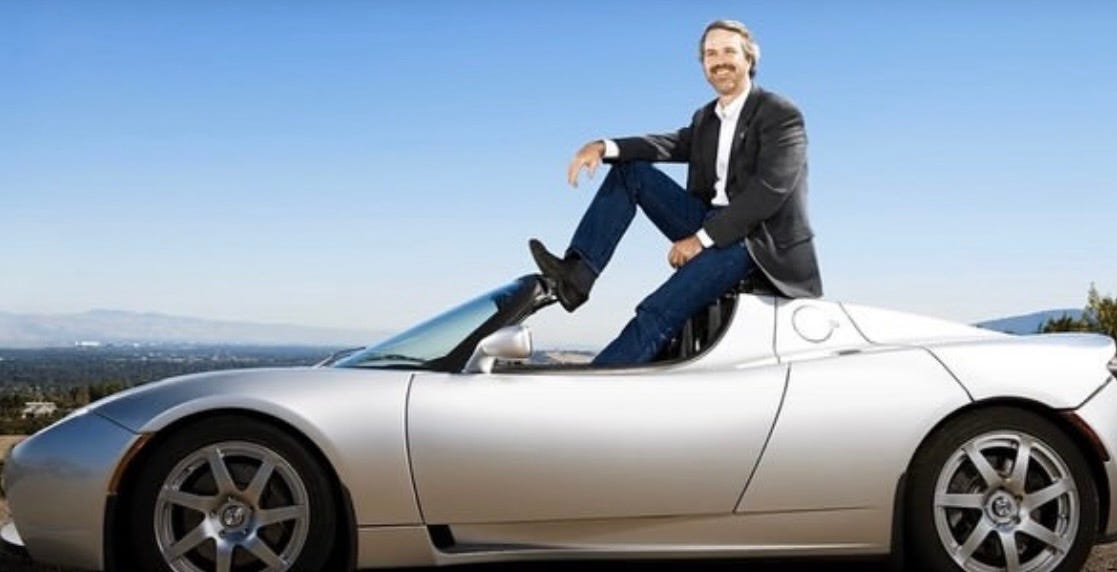
Of course, I knew the premise to be false, and thankfully the responses echoed this sentiment. Tesla’s original pitch making a case for a no-compromises electric car, entering the make from the top and building scale with higher-volume lower priced models to displace internal combustion vehicles as the dominant platform was not anything he had ever pitched. Rather, it was pitched to him by Martin Eberhard and Marc Tarpenning, only after they had been shown the door by every venture capital firm that they had approached on Sand Hill Road. Musk, who ultimately funded the Tesla when no one else would, was not the first investor they approached. He was near the bottom of the list only after they had exhausted about every other path to secure funding for it.
The Return of Private Patronage
This flags an uncomfortable reality with deep historical roots: when institutional lending sees new, speculative innovation as too risky or grandiose, we are back to Renaissance era private patronage - a modern day Medici family - to run in parallel alongside trade guilds (modern investment banking) and public municipalities (government/public sector). It’s this three legged stool that encourages healthy advancement of social progress. In fact, the Medici investments differed fundamentally from the other two paths in key ways that would havein ways that would have felt familiar to entrepreneurs like Martin Eberhard and Marc Tarpenning including investing in Asymetric upside (betting on the young and unconventional creators instead of established, safe players, thus encouraging innovation), building network effects in their investments (the cross pollination we have come to see as a hallmark of Musk’s investment strategy), converting soft power through their influence (smoothing the regulatory path needed to drive innovation), and structuring financial innovation as a work around to the Catholic church’s ban on usury using a “bill of exchange model” - similar to the convertible debt Musk leveraged in building his suite of massive scale investments.
Why Tesla Looked Impossible
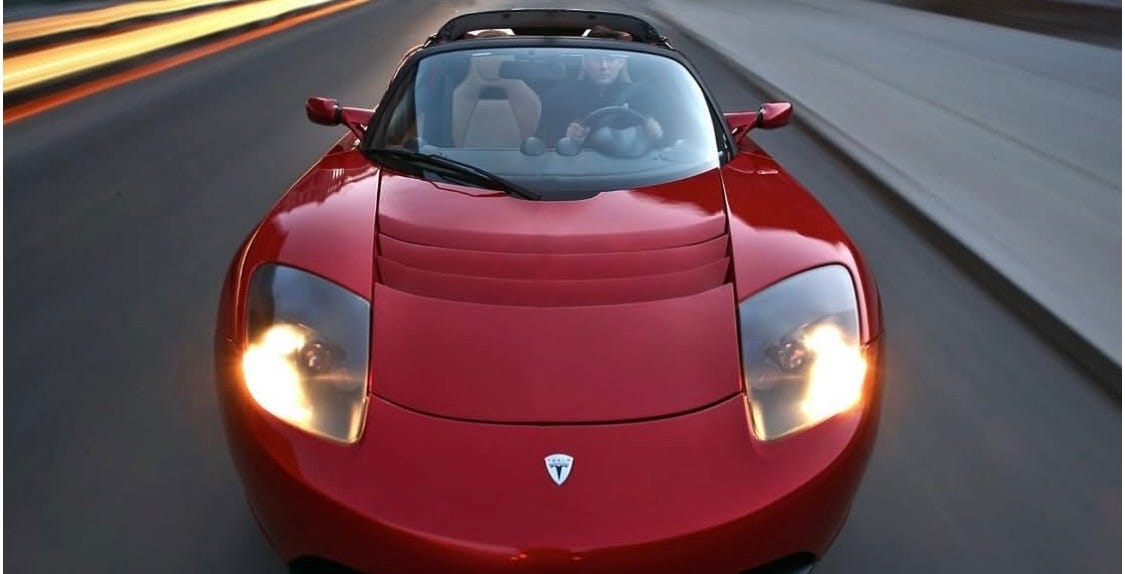
Bear in mind, back when Eberhard and Tarpenning were shopping Tesla, the objections, at the time, were rational. Investments at the time favored producing software, not hardware. Software was quicker to bring to market, less capital intensive, and had the potential to build scale far more rapidly than consumer electronics. Worst of all, what Eberhard and Tarpenning were pitching wasn’t even consumer electronics of a manageable scale like a new Mp3 player or e-reader (like their prior venture together, the Rocket Ebook). They wanted to build massive factories to build cars - the most complex and difficult to build production lines imaginable in an industry that was so entrenched it had already existed for more than a century prior. If there was incremental optimization to be had, surely there had been more than hundred years since Henry Ford’s assembly line to figure it out. In the words of American Idol judge, Randy Jackson at the time, “that’s a no from me, dawg” was the common refrain as they were repeatedly escorted out of the building and into the parking lot - at least until Musk finally said yes.
In 2003, with an estimated net worth of between $160M—$200M, Musk, at the time, already had “fuck you money.” Measured against the Series A raise at the time of $7.5M of which $6.35M came from Musk’s personal fortune, he could comfortably lead that initial investment round along with the $13M Series B round in 2005 and $40M series C in 2006. In December of 2008, at the time he took over as Tesla’s CEO, he committed a further $20M of a $40M emergency lifeline to stave off impending bankruptcy as the first Tesla Roadsters were finally reaching paying customers. Even at that point, Tesla was far from profitable (per the original business plan, it was never expected to be - that wasn’t anticipated until the release of subsequent higher volume vehicles like the Model 3 and Y), and Musk would need to continue to contribute an estimated $55M-70M to fund the venture as the Model S was designed, engineered and ultimately reach production in 2012, well past the $226M 2010 IPO. If we were to track his investments in SpaceX through the same time frame, that would be $100M between 2008-2012 with a further $100M stacked on top from other investors.
Civilization-Scale Capital - The New Medici
As a result of these big bets, today Musk’s private net worth is in line the mix with the AUM of major alternative asset lenders like Blackstone ($1.3T), Apollo ($938B), KKR ($744B) and Ares ($644B) - the very movers of industry that can be characterized as today’s king makers. For Musk to continue placing civilization-scale bets across industries, even hundreds of billions may not be enough.
Is Musk on a path to consolidate power and build monopolies to advance some deep rooted narcissistic need? Very likely. Is that a bad thing? Unless you’re one of the true founders like Eberhard and Tarpenning being written out of the history books, maybe not - at least not entirely. And if the scale is now into the trillions to do this effectively, maybe that’s just where the goalposts now sit for a modern day technological Rennaisance. This forces us to examine an uncomfortable question: what happens when civilization-scale innovation becomes dependent on individuals rather than institutions? Venture capital wouldn’t fund Tesla and SpaceX, government and public markets couldn’t build them, and so a future future trillionaire with “fuck you money” did. If that’s increasingly true for AI, robotics, energy, space, biotech, etc., then we’re entering an era where technological progress depends as much on modern patrons willing to write the big checks as much, if not more so, than traditional institutional lending.